In the planning stages of Awe & Wonder, I knew I wanted to offer clay as a medium for families to explore, but I wasn’t sure how often I would have it on one of the stations, or how I would present it. My experience with clay was very limited and I hadn’t used it within my teaching or at home with my daughter.
After talking about my project with artist Pete Moorhouse, he suggested having clay available at every creative session. He said clay offered such a rich learning experience for children and adults, its inexpensive, and is often a material that children have not had contact with before. He also suggested reading a pamphlet all about clay produced by The Froebel Trust, which I strongly recommend if you are interested in learning more about using clay with your child or in your setting.
A couple weeks after this phone call, I then had some teacher training through my workplace, and the workshop featured the use of clay within the early years classroom setting – it was perfect timing. The workshop opened my eyes to this wonderful product, the many different possibilities children can create with it, and the wealth of learning that takes place when children use it.

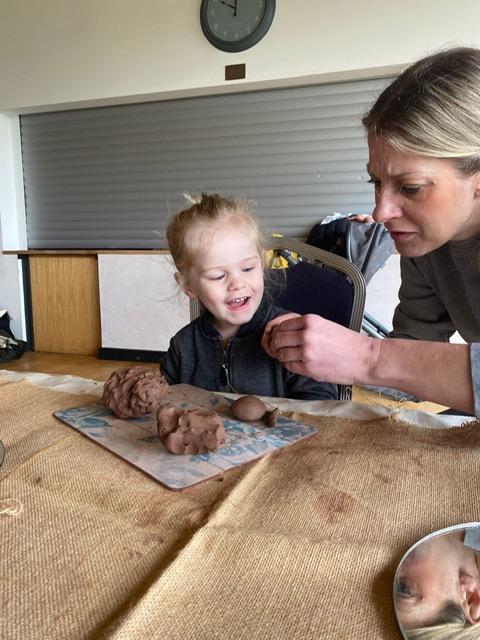
For the past two months, we have been using Earthenware clay within our creative sessions. I bought the clay through Pottery Crafts for less than £10 per 10kg bag. When setting out the studio, we will offer balls of clay on a large table with a selection of curiosities to explore alongside it; shells, pine cones, pebbles and pipe cleaners. Through observations, I have noticed that it can take some time for children to become confident using clay – some seem to find it cold, a bit strange, and some children don’t particular like the mess it makes on their hands.

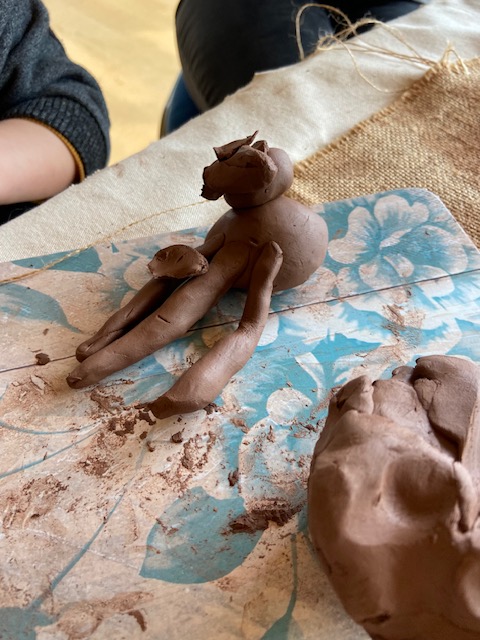
However, I have noticed some children go straight in: patting it, rolling it, pushing objects into it and making ‘creatures’ or whatever comes into their imaginations. Some children take a brief encounter with this new material; maybe a poke or a prod. Some children spend prolonged periods of time completely engrossed in it’s fascinating qualities.
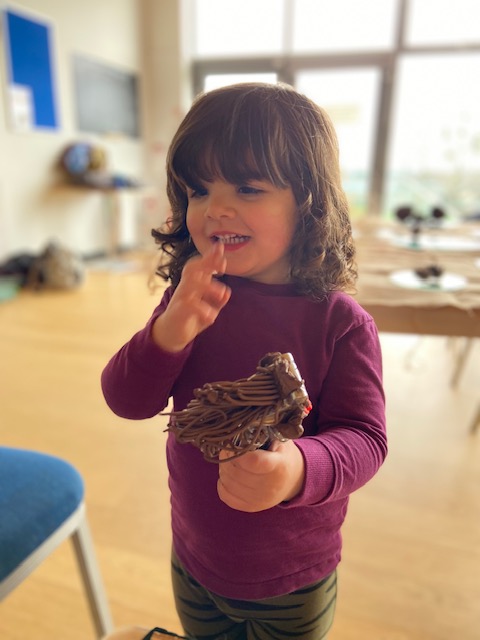
Children have created some thought provoking objects – we’ve had spiders, birthday cakes with worm candles, magic doors, and bowls of noodles using a garlic press (greatest addition to clay so far). Each offering of clay opens up an opportunity for self-expression, creativity and imagination. It is one of my favourite parts of teaching, to observe and enter into a child’s world and creative dialogue when they are creating with clay.

So what’s so good about clay? Well, in my opinion, it’s a great malleable material for children to work with. It is low cost, natural and sustainable, and can be flattened, or built into different forms and structures. It holds much better than playdough, giving children more freedom to work their structures higher and larger. If looked after and sealed well, it can last for months! I think the downsides to clay, are that is can stain clothes, and is less ‘inviting’ to play with than beautifully scented playdough. However, I think the positives far outweigh the negatives, and I hope to be using clay on a regular basis for the forceable future.
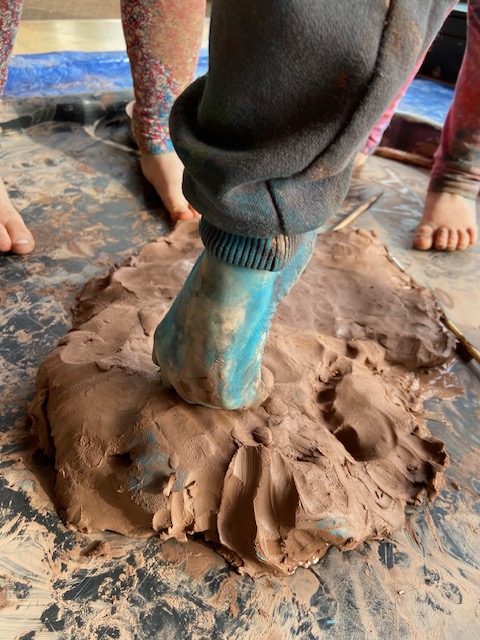
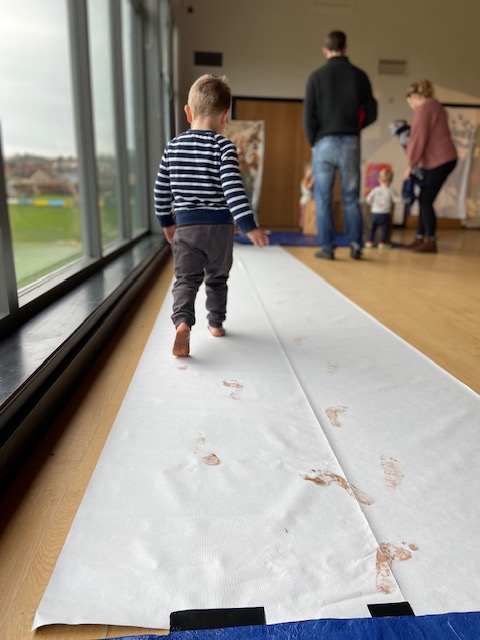
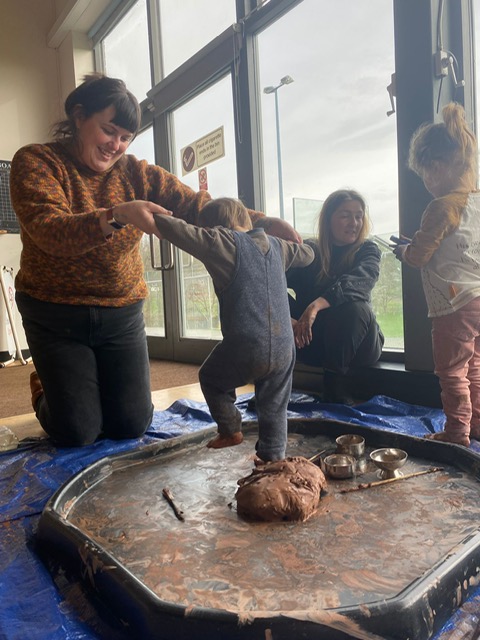
Continuing my fascination into clay, I began searching the internet for ideas and articles about the product. I came across a thread on a Reggio Inspired Facebook group that suggested a child’s first encounters with clay should be through their feet. This was extremely interesting to me, as I had only been offering it high up on adult tables, for children to explore with their hands. So I planned a session where we put a big mound of clay in a tuff tray on the floor. I imagined the children might want to walk around after putting their feet in the clay, so I positioned some rolls of wallpaper along the stretch of the hall, connecting the tuff tray to the painting easels.
Our sessions run from 9:30 am until 11:30 am, and for the first half an hour, there was little interest in the clay on the floor. Some children looked at it, poked a paintbrush in it, and then wondered off to find something else to do. It wasn’t until I played alongside one boy who was feeling it with his hands and asked him, “I wonder what it would feel like on your toes?”. His face lit up with curiosity and told me he wanted to find out. His mother helped take it socks off and he started walking on the mound.
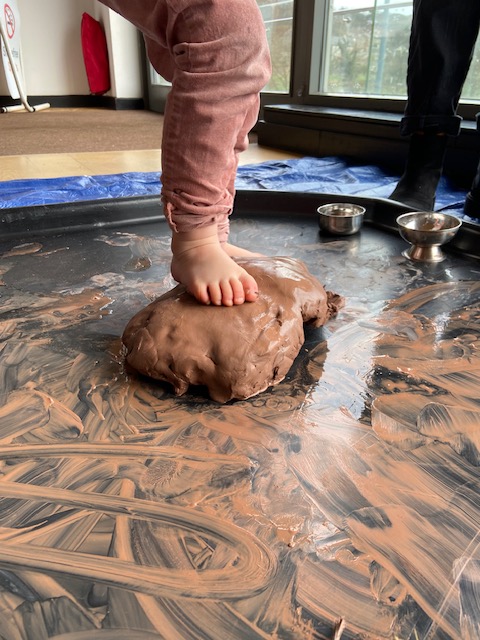
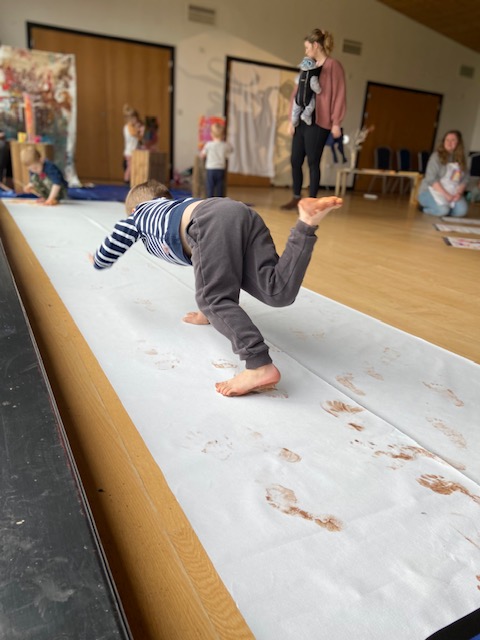
This small interaction sparked a drive of wonder for the group of children, with many slowly joining in to feel the clay between their feet and make marks on the paper. Some children enjoyed adding water onto the clay, seeing how it became slippery and wet. Some loved running up and down the length of the paper, watching their marks fill the blank spaces, and even practising some yoga.
This moment made me think about how children explore and develop, and the importance of using their feet to learn about the world around them. From further reading, I learned that children’s feet have just as many nerve endings as their hands, sending important messages to the brain which activates the vestibular and proprioceptive systems.
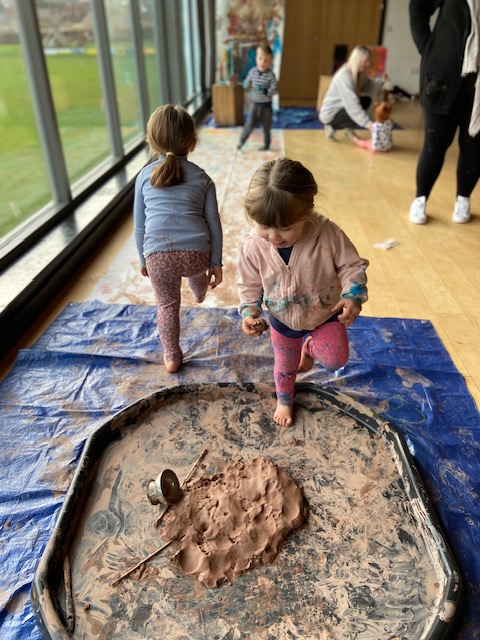
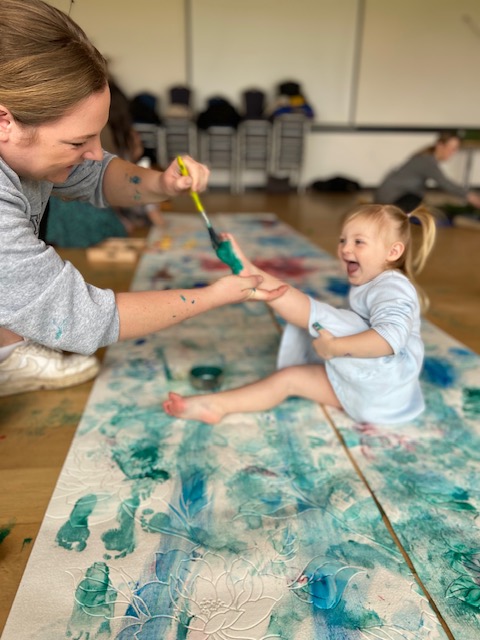
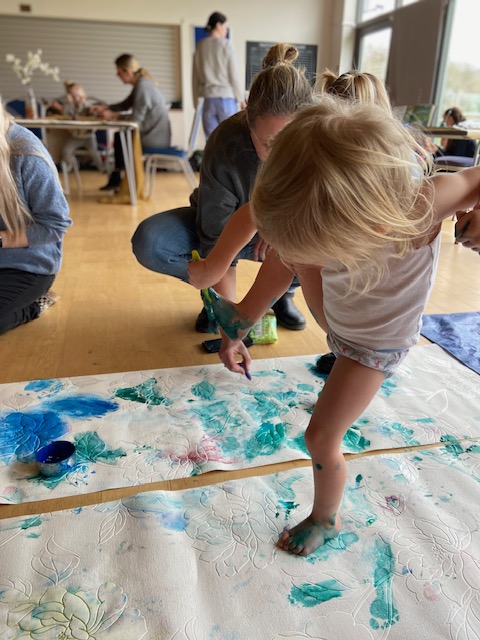
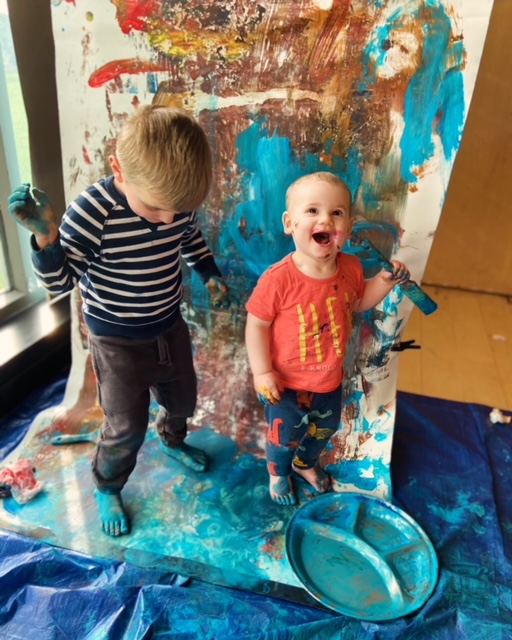
The reading into the importance of barefoot sensory play for children has provoked me into thinking about how we can offer this within our creative sessions. It is clear to see that from our observations, most children love to paint their hands and feet. I am now wondering what other materials children can experience using their feet. If you have ideas, please do let me know.
The next stage of our exploration with clay will be form – how can we explore different forms within clay? What structures can we create using clay, with the possible addition of wire?
Our journey into clay has been a great start. I am really excited to see what our little artists create next…
We run free, creative art sessions for families every other Tuesday at the George Reynolds Centre, Crewkerne. Our next drop-in session takes place on 26th March between 9:30am and 11:30am (we start tidying up around 11:20am). This project has been awarded a grant from Somerset Community Foundation and Crewkerne Town Council, to provide high quality art experiences for our local community.
If you’re interested in what we do, make sure you follow us on Instagram and subscribe for updates on this blog.
Thanks for reading 🙂
Victoria
 aweandwonder.blog
Leave a comment